
Welcome
Hi! I'm Hamish Huggard. I work on data science, machine learning, data visualisation, and web development.
Résumé

Hamish Huggard
Physics Teacher & Educational Technologist
hamishhuggard@gmail.com github.com/hamishhuggard +64 21-0261-6118
Profile
Physics teacher and educational technologist. I teach full-time at Glenfield College and build interactive simulations and animations that let people work a concept out for themselves. My data-driven animations have reached millions of viewers, and led to a six-figure Open Philanthropy grant to make more of them.
Technical Skills
Teaching:
Physics and mathematics, interactive simulation design, explanatory animation, technical writing.
Interactive Web & Viz:
JavaScript, HTML Canvas/SVG, D3.js, React, Plotly, CSS.
AI & ML:
Python, PyTorch, LLMs, AI Agents, NLP, Scikit-Learn, Pandas.
Engineering:
Git, SQL, Postgres, Docker, Linux, Kubernetes.
Awards
2020
Best M.Sc. Thesis Award (CS Dept)
2019
Postgraduate Research Scholarship
2017
Postgraduate Honours Scholarship
2017
Senior Scholar Award (Faculty of Arts)
2015
Sir Robert Jones Scholarship in Philosophy
Adventures
Ultra-Endurance:
Walked the length of New Zealand (Te Araroa Trail) over 6 months (3,000km).
Ran the South Island Ultra-marathon (2026).
Walked the Camino de Santiago in Portugal.
Half Marathon Personal Best: 1:51.
Experience
2026-Present
Glenfield College
Physics Teacher (Training, The Teachers' Institute)
Teaching Year 9 and 10 science and Year 12 and 13 physics full-time.
Built my own software suite for teaching, combining slide decks, lesson plans, calendars, timetables, roll call, flashcards, student progress tracking, and interactive simulations.
Coach the robotics club and help run the adventure club.
2024-Present
METR (via Equistamp)
Research Engineer (Contract)
Served as an expert human baseline for benchmarking state-of-the-art AI agents in programming and ML tasks.
Performed technical Quality Assurance (QA) on model outputs and contributed code to evaluation suites to ensure rigorous testing of agent capabilities.
2022-2023
Global Problems Cheatsheet
Founder
Founded a project creating technical educational media on global catastrophic risks, following the success of previous data-driven animations which amassed millions of views on social media.
Secured a 6-figure grant from Open Philanthropy on the strength of that work.
2023 Freelance Full Stack Developer Built interactive data visualizations and custom web implementations for various clients.
2020-2021 Litmaps Data Scientist Built the interactive research-graph visualizations at the core of the product in React and D3.js, and deployed the company's first production AI features.
2018-2020 Orion Health Data Scientist (Graduate) Machine learning on clinical text: built a feature engineering library for extracting drug prescriptions from doctors' notes.
Education
2018-2020
University of Auckland
GPA: 4.0 / 4.0
Master of Science in Computer Science
Funded by Precision Driven Health (PDH) Scholarship.
"The best Masters thesis I have ever seen." — External Examiner.
2014-2017
University of Auckland
GPA: 3.81 / 4.0
Conjoined B.Sc. in Physics & Math / B.A. in Philosophy & CS
(Double Major in Physics/Math, Double Major in Philosophy/CompSci)
Publications
2020 Concept drift detection for medical triage.
H. Huggard, Y.S. Koh, G. Dobbie, E. Zhang.
2019 Feature importance for biomedical named entity recognition.
H. Huggard, A. Zhang, E. Zhang, Y.S. Koh.
2018 Predicting air quality from low-cost sensor measurements.
H. Huggard, Y.S. Koh, P. Riddle, G. Olivares.
Portfolio
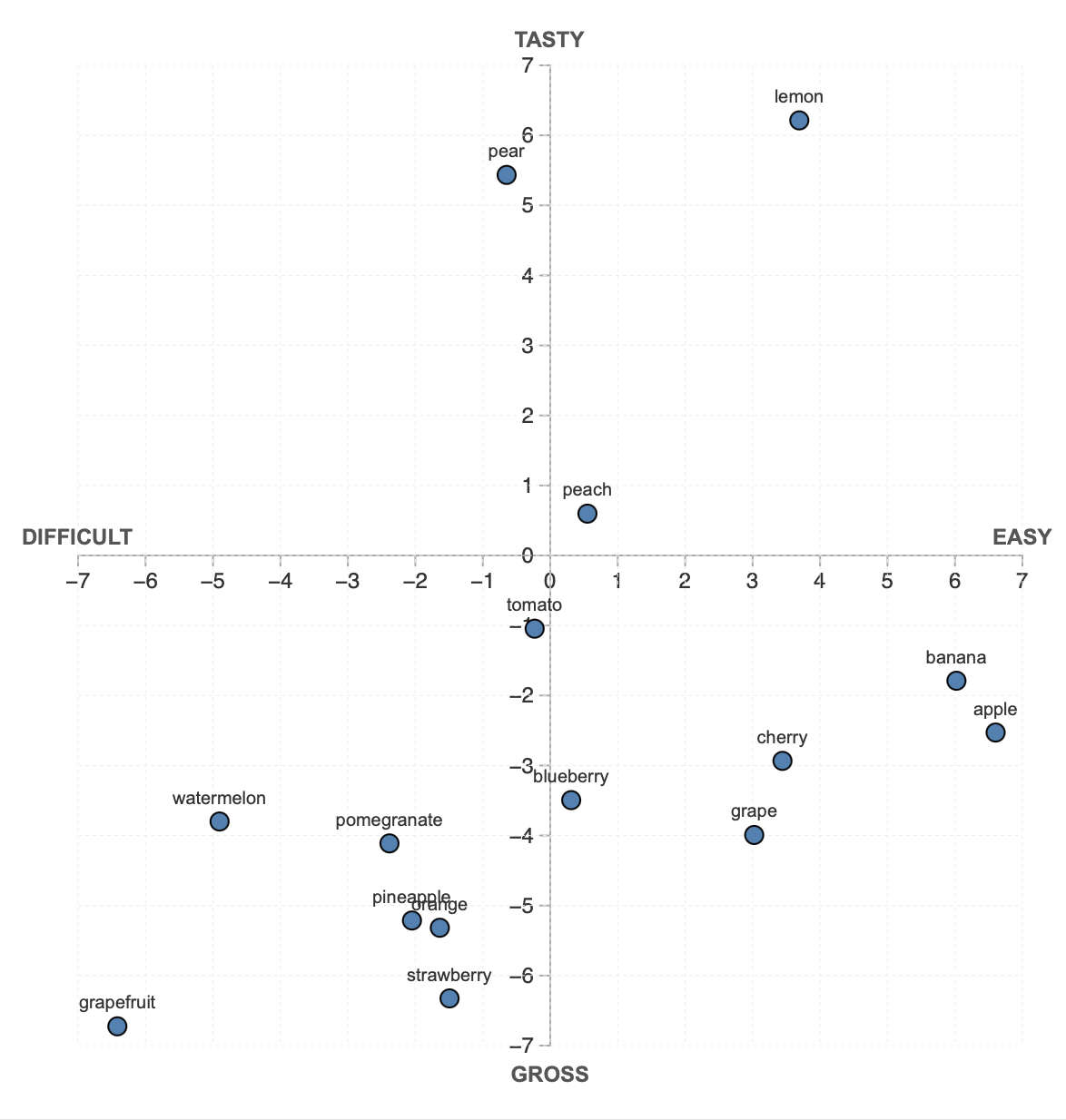
Embeddings Visualizer
A tool for visualising token embedding spaces.
Each axis is specified with a positive and negative token. A word list is then projected onto this axis.
See a more detailed explanation here.
Frontend uses D3.js.
Backend uses Python, flask, and gensim.
Deployed on a DigitalOcean VPS.
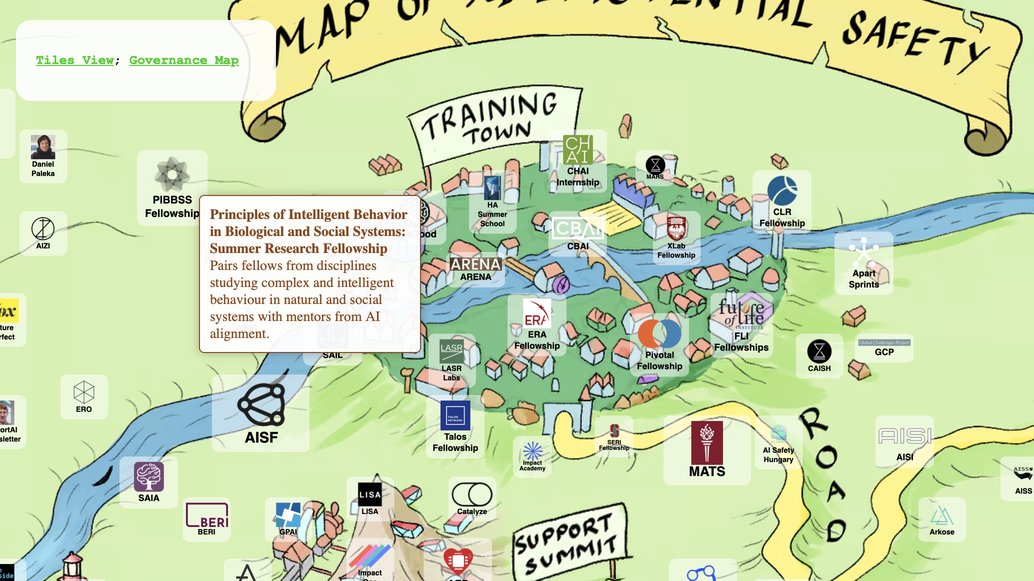
Interactive Map of AI Safety Ecosystem
I was comissioned to create an interactive map of the ecosystem of organisations related to AI safety.
Users can zoom and pan across the map, hover over items for more information, and click on items to see the respective website.
Created with D3.js.
The data is pulled from a Google Sheet so that anyone can suggest updates or corrections.
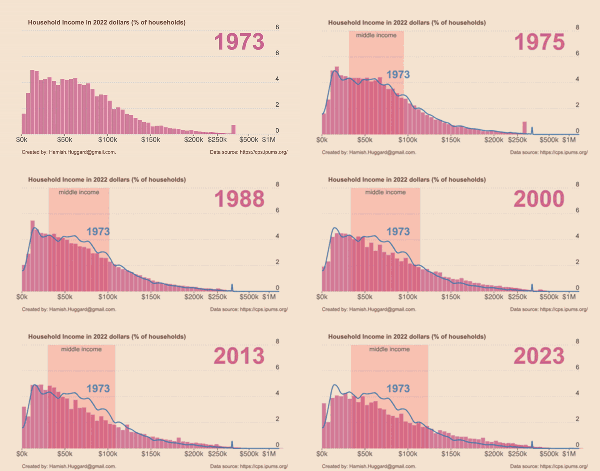
Animated Income Visualisations
I was commissioned to create animated visualisations of US income over time.
The data preparation and prototyping was done ith Python, Pandas, and pyplot.
The polished visualisations were created with html, and D3.js.
A web interface in the repo allows further customization of the animations.
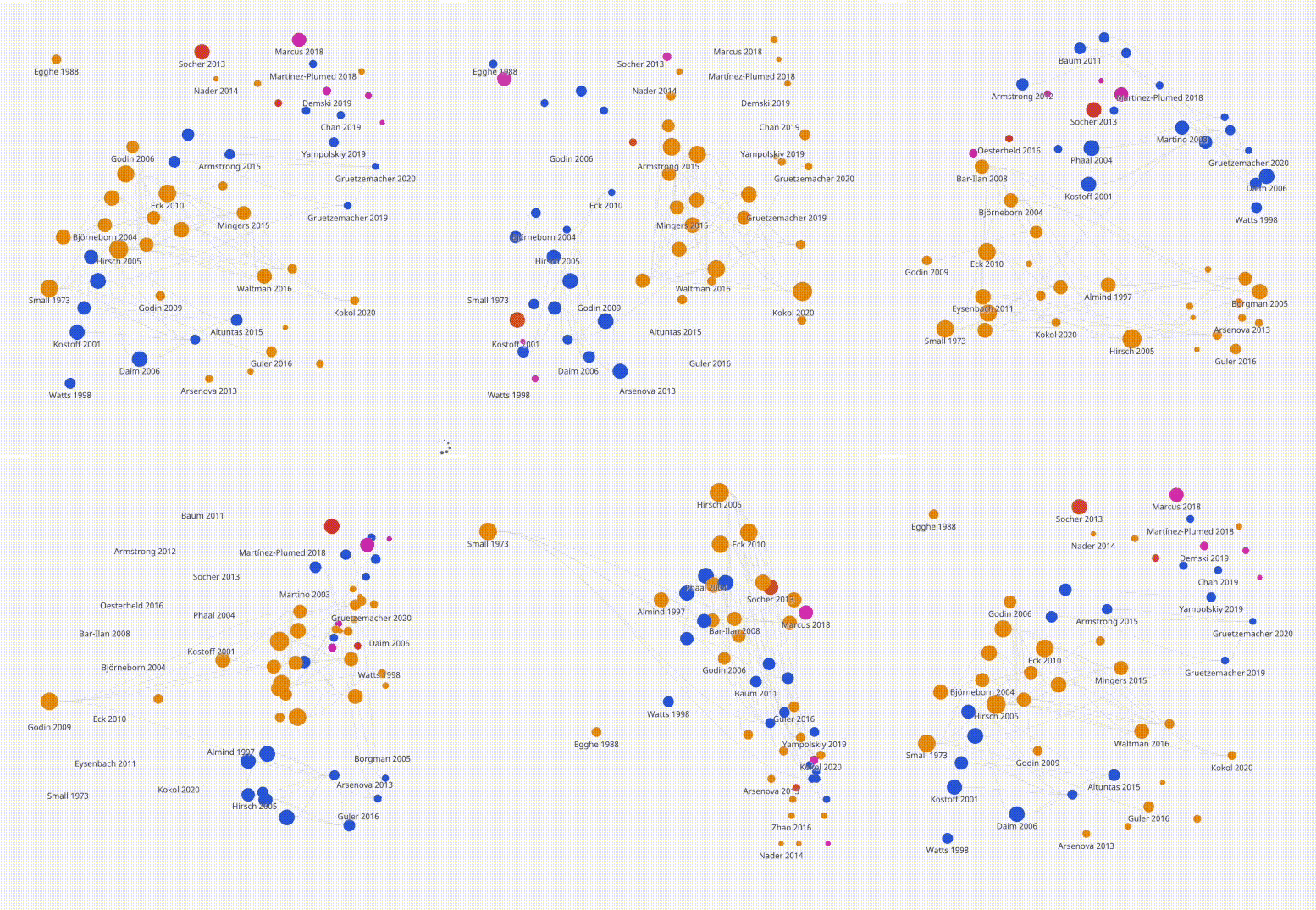
Litmaps
Litmaps is an early stage startup which builds tools for visualising and discovering scientific papers.
I coded the visualisation logic currently in production.
This involved implementing efficient javascript algorithms for visualisation use-cases and setting up any necessary backend using FastAPI and Python.
More details can be found here.
Animation: Mechanistic Interpretability Overview
I animated a snippet from the podcast AXRP to provide an overview of the motivation and content of mechanistic interpretability.
The podcast is a conversation between researcher Neel Nanda and host Daniel Filan.
This was used in a training course and has 5.9k views.
Animation: Modular Arithmetic Mehcanistic Interpretability
I animated a snippet from the podcast AXRP which illustrates how transformers do modular arithmetic, which was an output of some of Neel Nanda's mechanistic interpretability research.
The podcast is a conversation between researcher Neel Nanda and host Daniel Filan.
Research
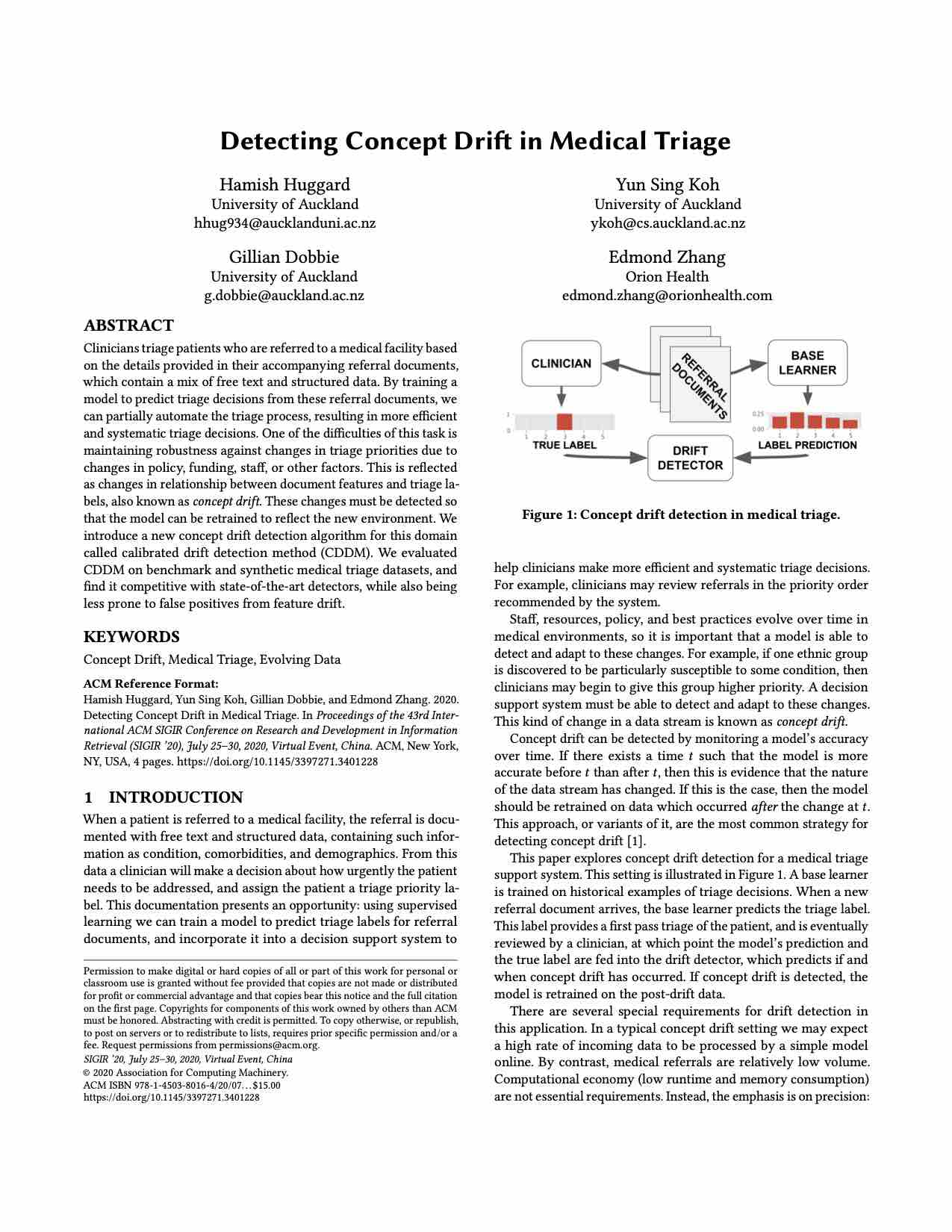
Detecting Concept Drift in Medical Triage
2020 ACM SIGIR Conference on Research and Development in Information Retrieval
I developed an algorithm for detecting concept drift (a species of data shift) via model miscalibration.
The paper uses machine learning medical triage models as a motivating example.
See the below section on my master's thesis for more context.
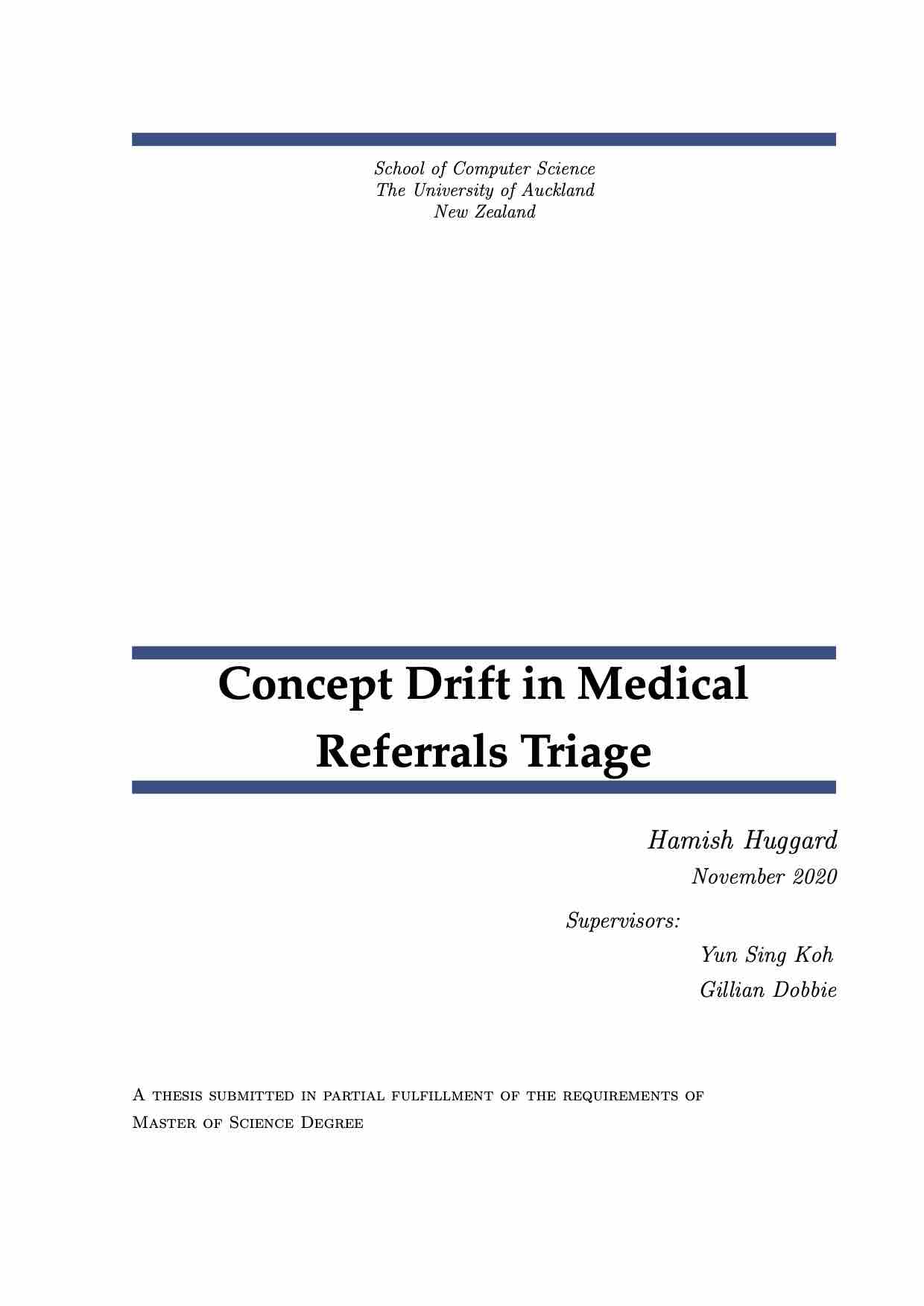
Concept Drift in Medical Referrals Triage
2020 M.Sc. thesis
My M.Sc. was funded by a scholarship form the Presicion Driven Health Partnership. I worked on detecting when a medical machine learning model has become obsolete and requires retraining.
I won the annual "best M.Sc." prize from the Auckland University computer science department. One of my examiners said it was "the best master's thesis they had seen".
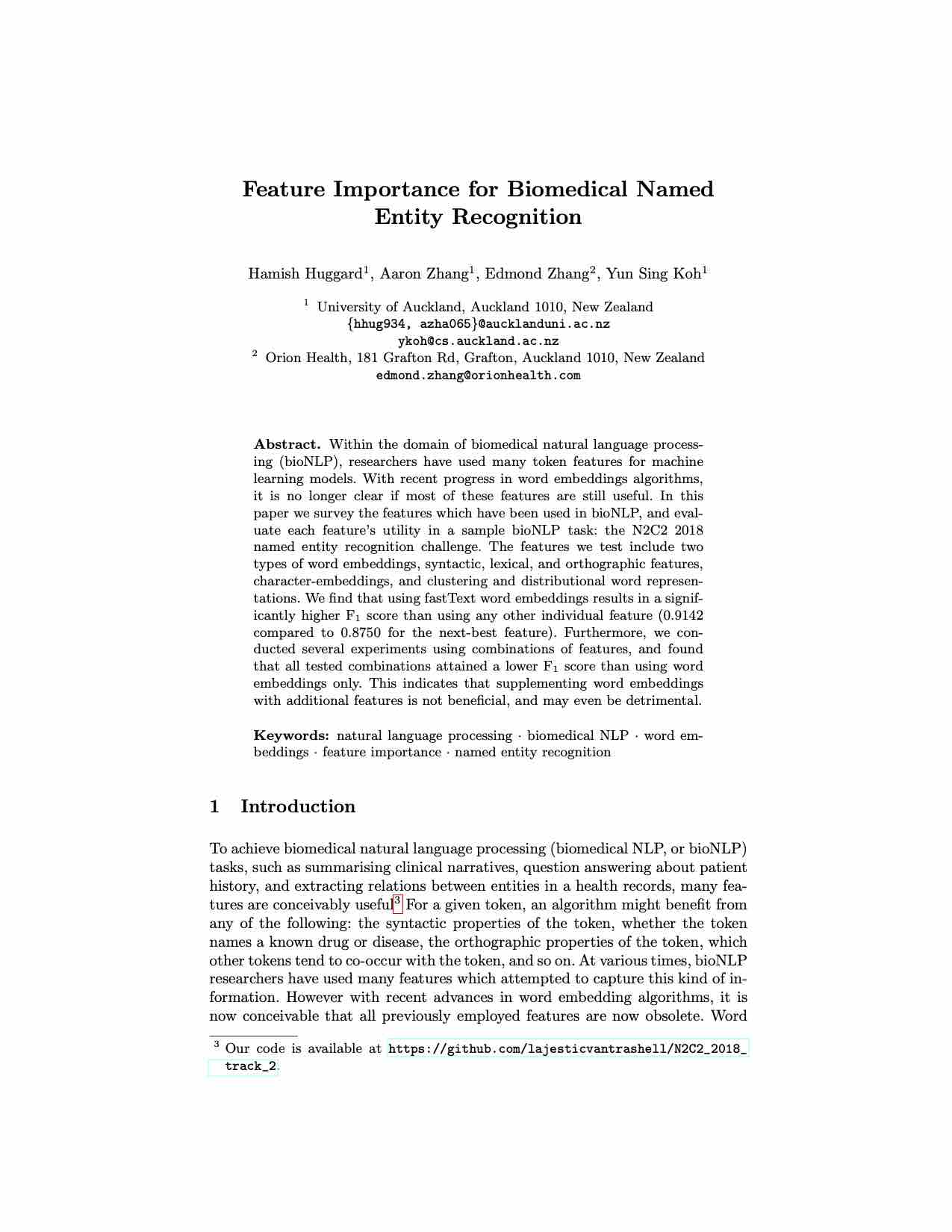
Feature Importance for Biomedical Named Entity Recognition
2019 Australasian Joint Conference on Artificial Intelligence
I did this research during a research intership at Orion Health.
The paper surveys features which have been used in biomedical natural language processing, and evaluates each feature's utility for a deep learning approach to biomedical named entity recognition.
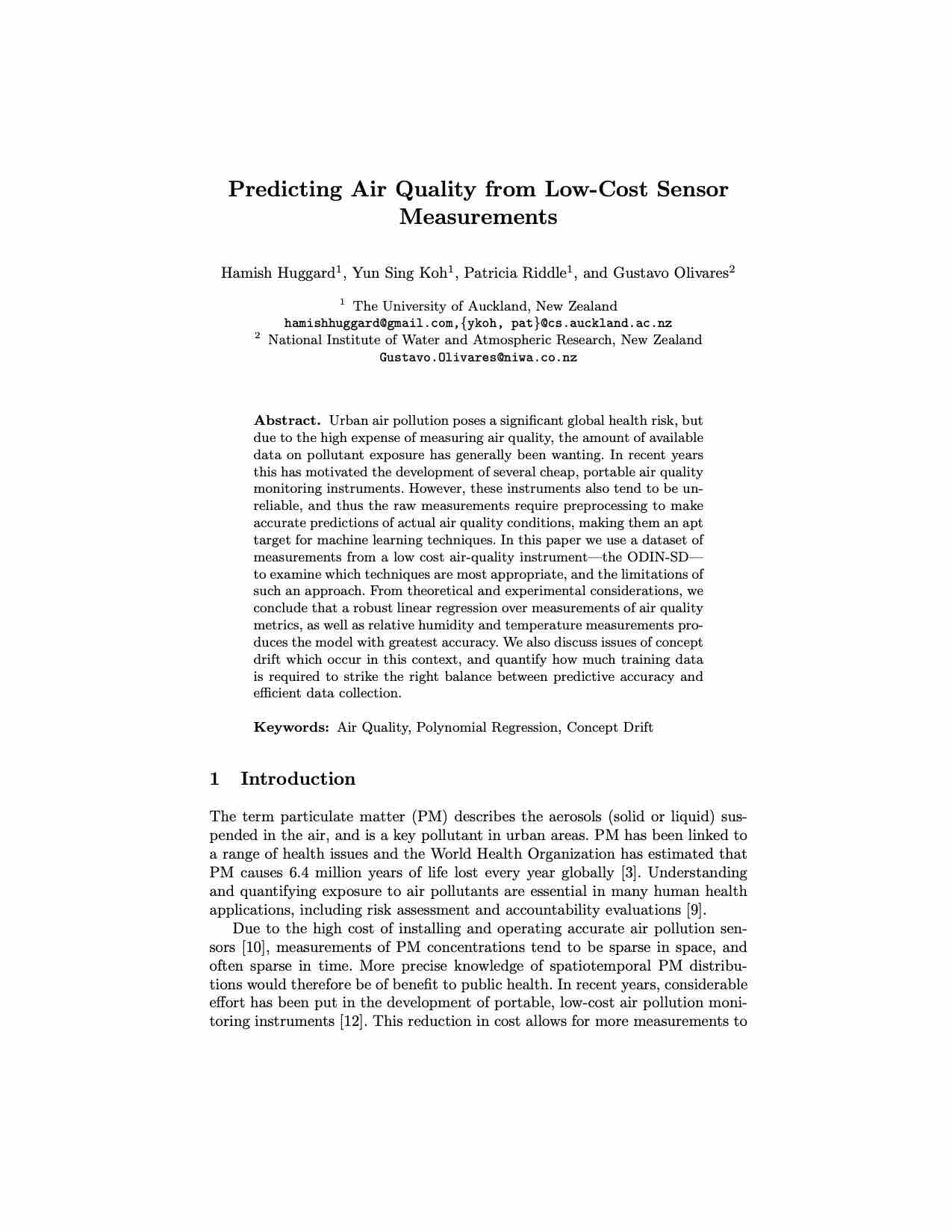
Predicting Air Quality from Low-Cost Sensor Measurements
2018 Australasian Conference on Data Mining
I worked with the National Institute of Water and Atmospheric Research (NIWA) on modelling air quality using low cost sensors.
Low-cost sensors pose a number of challenges: they are unreliable, noisy, and may require ongoing calibration. This paper explores these challenges, and evaluates several approaches to spatiotemporal modelling of air quality using the sensors.